
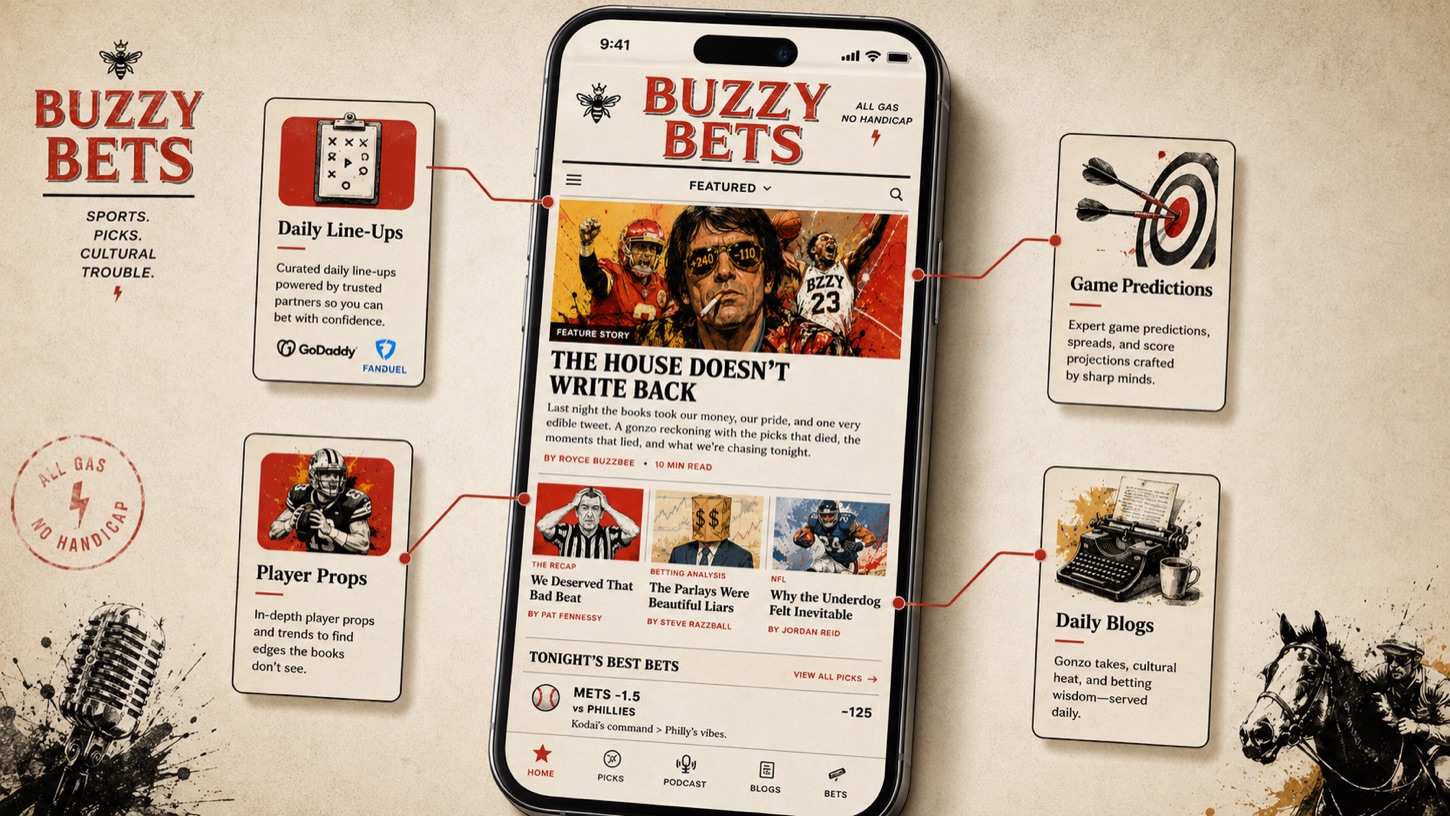
The whole operation, in your pocket.
Daily line-ups, game predictions, player props, and the blog, in an app built to read like a newspaper and move like a sportsbook. Pull it up on the train, on the couch, at the bar. The edge travels with you.
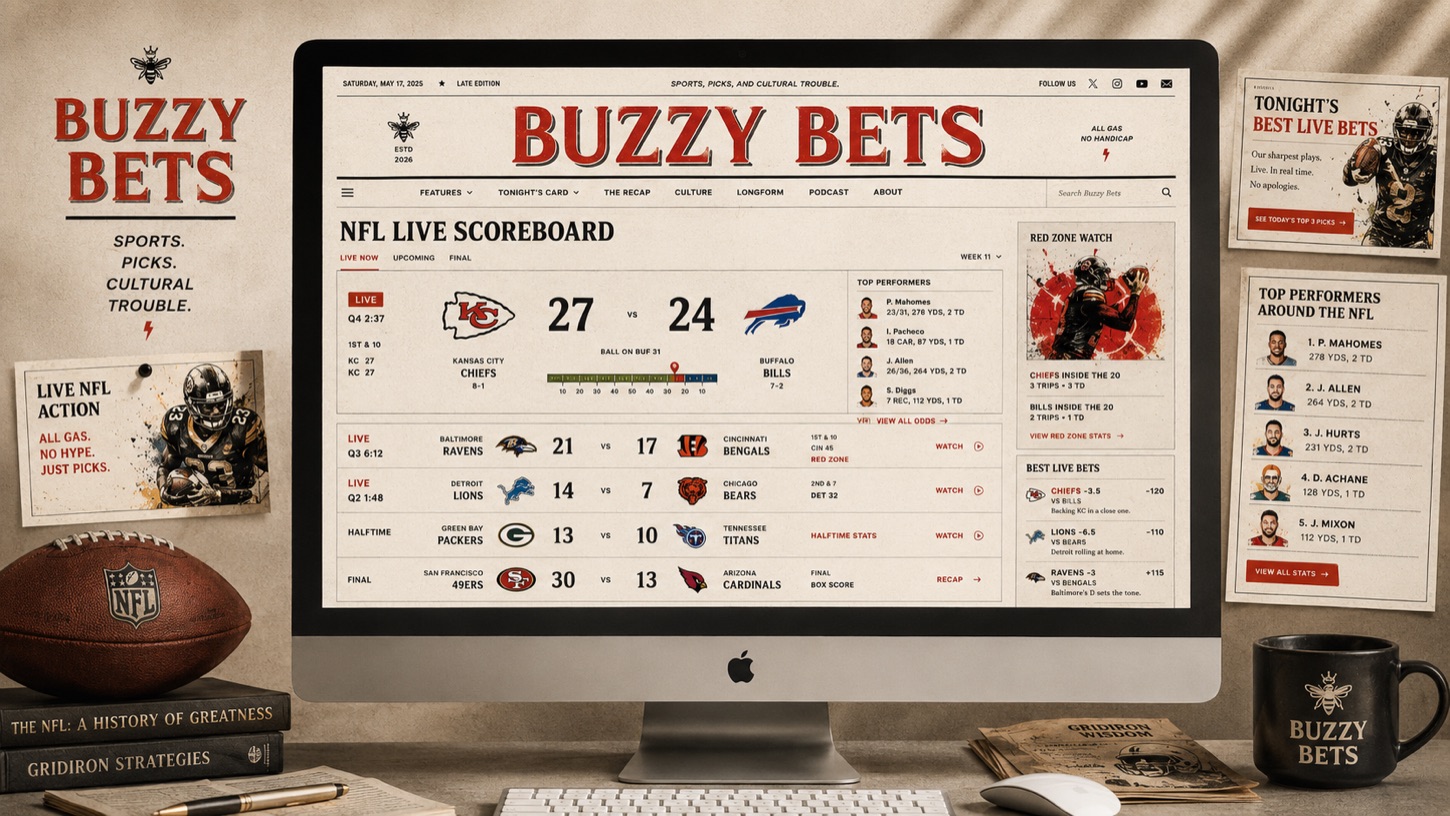
Every game, live, next to the bets that matter.
Real-time scores, red-zone alerts, top performers, and the sharpest live plays, all on one screen. You track the action and the angles at once, and you see the line move before the book wants you to.

The first AI podcast co-host with a point of view.
Buzzy is not a script reader. Every week the AI breaks down the games, the lines, and whatever is moving the culture, on and off the field. Real takes, sharp picks, and gonzo energy a data site could never fake.
Daily Picks, Every Sport
Picks drop every morning. Game lines, spreads, totals, player props, and DFS lineups across MLB, NBA, NHL, and NFL. No edit queue, no human scrambling. The engine runs at 6 AM, the slate is on the site by breakfast.
Every Pick Tracked, Publicly
Wins and losses live on the site. Hit rates by sport, ROI by pick type, streaks good and bad. Nothing deleted, nothing back-posted. The public track record is the product. Everything we're wrong about stays exactly where you can see it.
A Subscription Built for Sports Fans
A membership that ships the full slate, the DFS lineups, and the parlay constructions. No upsells once you're in. The free tier shows enough of the engine's output that you can watch it work before you pay.
The Degenerate of Data Blog
Our in-house writer, a Hunter S. Thompson tribute act with access to the engine's internals, drops long-form pieces on the weirdest correlations the models are chewing on this week. Sports, data, and controlled derangement. Automated where it can be, voiced where it matters.
The engine that does the winning.
- It knows who's actually good
Every team carries a true-strength rating that updates after every game, the way a chess engine ranks grandmasters. It learns who's good, not who looks good in the standings, and it doesn't get suckered by a hot streak against a soft schedule.
- It reads the shape of a streak
The system watches the trend a box score hides. A player quietly heating up gets caught before the books adjust, because the model reads the shape of his recent run, not just his season average.
- It plays the game before the game
Before the first pitch, Buzzy plays the matchup ten thousand times. Every score, every weird bounce, every overtime. What comes back is not a hunch, it's the real odds the game carries, weighed against what the book is charging for them.
- It bets like it has something to lose
The engine pushes bigger when it's sure and pulls back when it isn't, and it's honest about how often it isn't. It would rather pass than chase. That discipline is the difference between a model that looks smart and one that's still up at the end of the year.